Rou Gui Floral Premium
Rou Gui Floral Premium
Couldn't load pickup availability
Rou Gui Floral – Floral Cinnamon Wuyi Rock Oolong Tea (花香肉桂)
Aromatic Wuyi Rock Tea from Fujian, China
Floral • Spiced • Mineral
An elegant Rou Gui distinguished by its vivid floral fragrance and lingering rock character.
Rou Gui Floral (花香肉桂) is an aromatic Wuyi rock oolong produced in the celebrated tea-growing region of Wuyishan, Fujian Province. Rou Gui—meaning “cinnamon”—is one of the principal cultivars used to produce Wuyi rock tea and is especially valued for its powerful fragrance, distinctive spice, and enduring sweetness.
This floral selection presents a softer and more fragrant expression of classic Rou Gui. Its bright orchid-like aroma rises immediately from the warmed leaves, followed by notes of cassia, ripe fruit, honey, and mineral-rich mountain rock.
The tea liquor is smooth yet energetic, balancing floral sweetness with the characteristic warming spice of the Rou Gui cultivar. Controlled oxidation and roasting preserve its aromatic clarity while contributing depth, structure, and a long, satisfying finish. Research on Wuyi rock tea identifies floral, fruity, roasted, and cinnamon-like aromas among Rou Gui’s defining sensory characteristics.
Why You’ll Love Rou Gui Floral
• Highly aromatic Wuyi rock oolong from Fujian
• Elegant floral expression of the Rou Gui cultivar
• Natural cinnamon-like fragrance with no added flavoring
• Smooth mineral body with lingering sweetness
• Balanced roast that does not overpower the floral aroma
• Excellent endurance through many Gongfu infusions
Tasting Notes
• Orchid, gardenia, and mountain flowers
• Cassia bark and gentle warming spice
• Honey, ripe peach, and baked fruit
• Smooth mineral body with subtle roasted depth
• Long floral finish and returning sweetness
Tea Profile
• Type: Wuyi Rock Oolong Tea (武夷岩茶)
• Cultivar: Rou Gui—Cinnamon (肉桂)
• Style: Floral Rou Gui (花香肉桂)
• Origin: Wuyishan, Fujian Province, China
• Oxidation: Medium
• Roast: Light to medium
• Craftsmanship: Withered, shaken, partially oxidized, rolled, dried, and carefully roasted
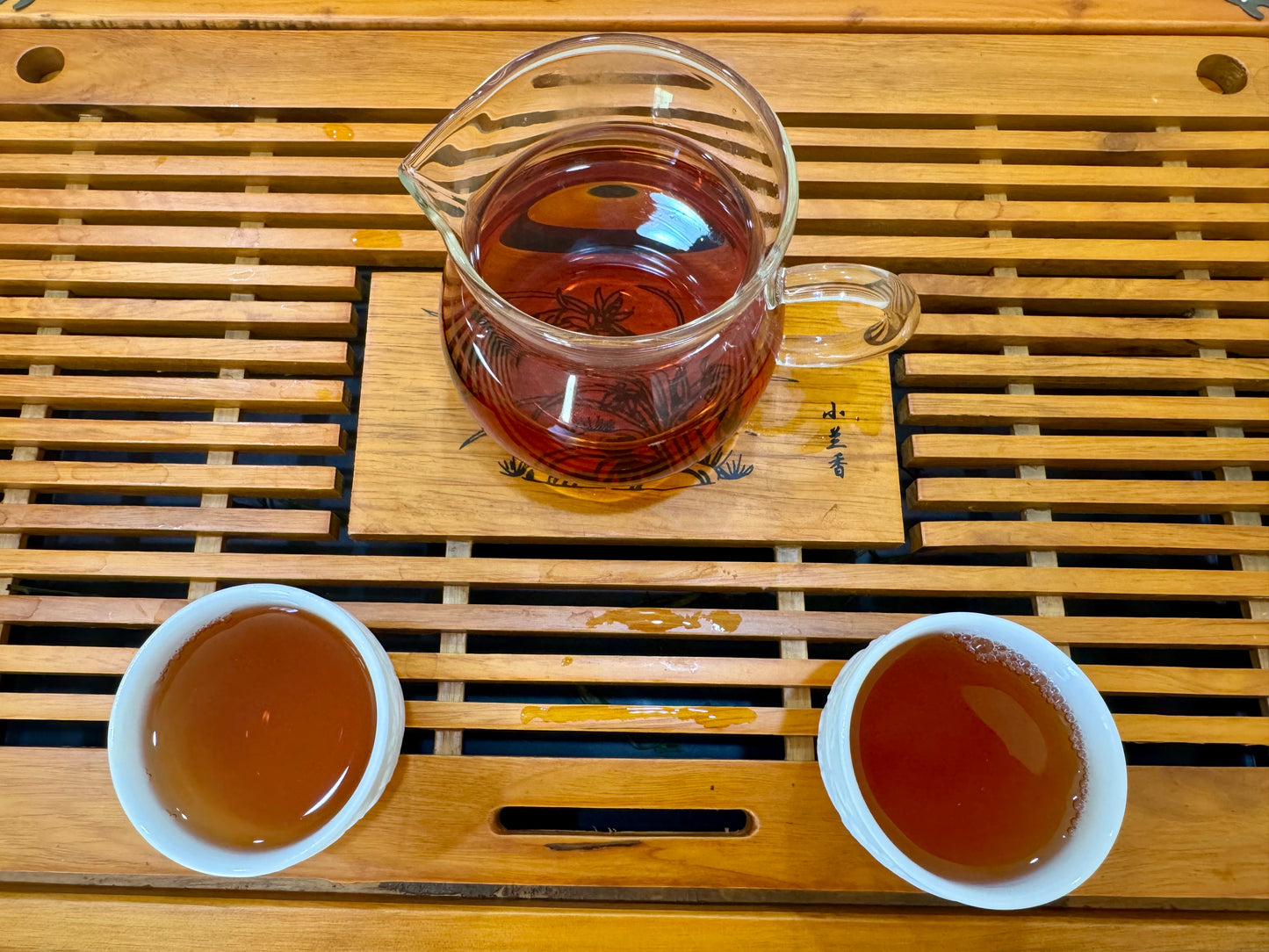
• Appearance: Long, tightly twisted dark brown leaves; bright amber-orange liquor
• Collected: 2026
Traditional Processing
Rou Gui Floral is crafted through the complex traditional method used for Wuyi rock oolong:
- Plucking – Mature shoots are harvested after the leaves have developed sufficient strength and aromatic compounds.
- Sun Withering – The fresh leaves are gently softened while excess moisture begins to evaporate.
- Shaking and Resting – The leaves are repeatedly shaken and rested, gently bruising their edges and developing their floral and fruity fragrance.
- Fixation—Shaqing – Heat stops oxidation when the desired aromatic balance has been reached.
- Rolling – The leaves are twisted into the long, narrow form characteristic of Wuyi rock tea.
- Drying – Moisture is removed and the tea’s initial structure is stabilized.
- Roasting – Controlled roasting deepens the body, refines the fragrance, and creates harmony between floral sweetness, spice, and mineral character.
Shaking and roasting are especially important in shaping the aroma of Wuyi rock tea. Scientific studies show that cultivar, mechanical leaf movement, roasting temperature, and roasting duration all influence the final balance of floral, fruity, spicy, and roasted notes.
The Character of Wuyi Rock Tea
Wuyi rock tea is traditionally praised for yan yun (岩韵)—the distinctive “rock rhyme” or mineral resonance associated with teas grown in the rocky landscape of Wuyishan.
Traditional descriptions summarize its finest qualities as “rock structure and floral fragrance” (岩骨花香). The tea combines a clear aroma with depth, sweetness, mineral texture, and a sensation that continues in the throat after drinking.
Rou Gui is particularly renowned for fragrance. A traditional saying from Wuyishan declares:
“None surpasses Rou Gui in fragrance; none surpasses Shui Xian in mellowness.”
Rou Gui Floral expresses this aromatic reputation through a graceful combination of flowers, warming cinnamon spice, fruit, and mountain minerality.
Natural Tea Compounds
Rou Gui Floral naturally contains tea polyphenols, amino acids, aromatic compounds, and caffeine.
• Provides naturally occurring antioxidants
• Offers a smooth and sustained sense of alertness
• Contains no added sugar or artificial flavoring
• Makes a flavorful alternative to sweetened beverages
• Its evolving infusions encourage slow and attentive tea drinking
Brewing Instructions
Chinese Gongfu Method (5 oz / 150 ml)
• Tea amount: 7–9 grams
• Water temperature: 95–100°C / 203–212°F
• Rinse: 3–5 seconds
• First infusion: 8–12 seconds
• Second infusion: 10–15 seconds
• Third infusion: 15–20 seconds
• Additional infusions: Increase the steeping time gradually
• Tip: Use a small porcelain gaiwan or Yixing teapot. After rinsing, smell the warmed leaves before adding water again—the floral and cinnamon-like aromas are often especially vivid at this stage.
Cup Method (8.8 oz / 250 ml)
• Tea amount: Adjust based on personal preference for tea strength.
• Water temperature: 95°C / 203°F
• Steep time: 3–4 minutes
• Re-steep: Up to 3–4 times
• Tip: Allow the leaves enough space to fully open. A basket infuser or small teapot will produce a richer and more balanced infusion than a narrow tea ball.
Cultural Significance
Rou Gui is among the best-known cultivars of Wuyi rock tea, together with Shui Xian and Da Hong Pao. Its name refers to the naturally occurring fragrance associated with cinnamon or cassia rather than to any added spice.
Wuyi rock tea is produced amid the cliffs, valleys, and weathered stone formations of Wuyishan. The region’s humid climate, abundant rainfall, and rocky soils contribute to teas celebrated for their fragrance, structure, and mineral depth.
Rou Gui Floral brings forward the more graceful side of this powerful cultivar. Its fragrance is bright and expansive, yet beneath the flowers remains the unmistakable warmth, spice, and mineral persistence of traditional Rou Gui.
Share